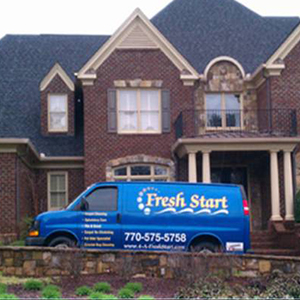

Inman Park was Atlanta’s first planned suburb — developed in the 1890s by Joel Hurt along Edgewood Avenue with the city’s first electric streetcar line running through it. The Victorian cottages and Queen Anne homes on Euclid Avenue, Elizabeth Street, and the blocks that branch off toward Freedom Park have been standing for over a century. Some of them have been in the same families for decades. Others have been restored carefully by newer residents who understood what they were buying.
The upholstery inside those homes tells a similar story. Antique and period pieces that came with the house or were found at the shops along Moreland Avenue alongside contemporary fine furniture from RH and Mitchell Gold brought in by homeowners who wanted new things in an old space. That combination — a century of architecture holding furniture from different centuries — is what I encounter most often when I work in Inman Park. And each piece requires its own approach before anything touches it.
The Fabric Mix in Inman Park Homes
Inman Park holds more genuine antique upholstery than almost any other Atlanta neighborhood. Victorian-era construction means Victorian-era furniture in some cases — horsehair-padded settees, silk-upholstered parlor chairs, wool-blend constructions that predate synthetic fiber entirely. These sit alongside mid-century pieces picked up from dealers along the BeltLine corridor and contemporary performance fabrics from the retailers Atlanta’s interior designers specify today.
The range of fabric sensitivities in a single Inman Park home can span two centuries of textile construction. A Perennials performance chair that can tolerate controlled moisture alongside a silk accent piece that cannot tolerate any. A Belgian linen sectional from RH in the main living space alongside a horsehair-padded Victorian settee in the sitting room off the front hall. Each requires its own pre-cleaning assessment — the method selected for one would damage the other.
Understanding that range before the job starts is what separates a specialist from a general cleaning service. It’s also what I’ve been doing in Inman Park and the surrounding intown Atlanta neighborhoods since 1992.
Antique and Period Upholstery — The Highest Stakes
Antique upholstery from the Victorian and Edwardian eras — the construction most likely to appear in Inman Park’s original homes — was not engineered for modern cleaning methods. The chemistry wasn’t designed for it. The extraction pressure wasn’t anticipated. The moisture levels that contemporary performance fabrics tolerate without issue can cause permanent damage to period silk, aged velvet, and pre-synthetic wool construction.
Silk shrinks under moisture. Period velvet pile crushes permanently from the wrong extraction pressure. Dyes in antique fabric bleed on contact with chemistry they were never designed to encounter. And on a piece that’s been in a family for a hundred years — or discovered at an estate sale on Euclid Avenue for a significant sum — that damage isn’t a cleaning problem. It’s an irreversible loss.
The UFT designation — Upholstery and Fabric Technician from the IICRC — covers the full range from contemporary performance fabric to period textile construction. On antique pieces specifically, the inconspicuous area test is non-negotiable. And sometimes the honest answer is that the piece shouldn’t be cleaned — that the risk to the fabric outweighs any benefit from the cleaning. Delivering that answer before the job starts, rather than after, is part of the service.
For fine velvet pieces — whether Victorian-era or contemporary — here’s what professional velvet cleaning actually involves.
What Every Job Starts With
Before I touch any piece of furniture in an Inman Park home — antique or contemporary, inexpensive or irreplaceable — the process starts the same way.
Fabric identification. Fiber content assessment. Inconspicuous area testing before any cleaning agent touches a primary surface. The method selected depends entirely on what the specific construction can handle — not what’s fastest, not what worked on the last job.
This is the step that gets skipped when a general cleaning service treats upholstery as a sideline. The outcomes of skipping it on period fabric are permanent. Learn more about my full upholstery cleaning process here.
Why Inman Park Homeowners and Designers Refer Atlanta Fresh Start
The interior designers who work in Inman Park — specifying furniture for restored Victorians and designing spaces that honor the neighborhood’s character while bringing it into the present — refer their clients to Atlanta Fresh Start because the result is predictable and the pieces come back the way they went out.
I’ve been a strategic partner of ASID, RESA, and IAHSP — the professional organizations whose members specify, source, and stage the furniture I clean. I’ve attended manufacturer presentations at Restoration Hardware and Mitchell Gold + Bob Williams alongside Atlanta’s interior designers. I know these product lines from the source. And after 35 years of working in homes like the ones on Euclid Avenue and Elizabeth Street, I know the period pieces too.

Professional Upholstery Cleaning in Inman Park and Surrounding Neighborhoods
Atlanta Fresh Start serves Inman Park and the surrounding intown Atlanta communities — Cabbagetown, Old Fourth Ward, Poncey-Highland, Virginia-Highland, Morningside, Grant Park, Reynoldstown, and throughout the intown corridor.
If you’ve inherited furniture with the house, found a period piece at a dealer along the BeltLine, or simply have upholstery that needs attention in one of Inman Park’s restored Victorians — call me before anything touches it. I’ll assess it, tell you what it needs, and give you a straight answer about what’s possible.
Request a quote here or call (770) 575-5758 — I answer every call personally.
Chris Kiadii — MTC, UFT, RRT, CCT, OCT, RCT, CRT, SMT, JTC
Owner, Atlanta Fresh Start | Serving Inman Park and Intown Atlanta Since 1992
Frequently Asked Questions
Q: Do you clean antique upholstery in Inman Park homes? A: Yes — with caution. Victorian and Edwardian-era fabrics require a pre-cleaning assessment and inconspicuous area testing before any treatment is applied. On genuinely antique pieces — silk, period velvet, pre-synthetic wool construction — I’ll tell you honestly whether cleaning is safe before I start. Sometimes the answer is that it shouldn’t be attempted.
Q: What fabrics are most common in Inman Park homes? A: Inman Park homes hold more fabric variety than almost anywhere else in Atlanta. Antique and period pieces alongside contemporary fine furniture from RH, Mitchell Gold, and Arhaus. The range can span two centuries of textile construction in a single home.
Q: How do you know which cleaning method is safe for a specific piece? A: I identify the fiber content and construction, assess the soiling pattern, and test in an inconspicuous area before applying anything to a primary surface. I hold the UFT designation — Upholstery and Fabric Technician — from the IICRC, covering the full range from contemporary performance fabric to period textile construction.
Q: Can you clean upholstery found at antique dealers along the BeltLine corridor? A: Yes — that’s exactly the kind of piece I assess most carefully. Vintage and antique finds often have unknown fiber content and construction. The pre-cleaning assessment determines what’s safe before anything touches the fabric.
Q: How often should fine upholstery in an Inman Park home be cleaned? A: Contemporary fine fabric in active daily use — every 12–18 months. Antique and period pieces — case by case, depending on the construction and condition. Some can be maintained on a regular schedule. Others are better left alone until there’s a specific reason to clean.
Q: Are you familiar with Inman Park’s neighborhood character and the homes there? A: Yes. I’ve been working in Inman Park and the surrounding intown Atlanta neighborhoods since 1992. The Victorian cottages and Queen Anne homes on Euclid Avenue and Elizabeth Street, the mix of longtime residents and newer owners, the antique finds from dealers along Moreland Avenue — it’s a neighborhood with a specific character and the upholstery inside reflects it.